FEATURED CONVERSATIONS

Wednesday, August 24, 2022

If you build a bad system, people will do bad things with it*

Photo: Publons.com

What distinguishes different political systems is not, necessarily, the intelligence or the goodness of its leaders. The contrary opinion is a common political assumption.  Systems, as some of you may have noticed with political and social systems in the west, rely on the strength and the integrity of their institutions and their capacity to withstand human weaknesses, ambitions, and greed. 

The presidency of Donald Trump serves as an example of how strong institutions can resist callous leaders with totalitarian propensities. 

But when institutions are weak, they become the fount of state failure. This is followed by the usurpation of power by the elite to the detriment of the citizens. We see this usurpation of power in South Sudan by the elites

What happens when leaders and lay people become used to institutional traditions that do not run according to defined regulations and protocols? The result is a culture of chaos. Essentially, the institutional cultures people are used to guide them. Let me illustrate this with an example.

A few years ago, while working as an immigrant settlement practitioner, I met this immigrant woman from the Caribbean. She told me she noticed something that surprised here in a good way. 

One day she decided to take a taxi so she walked to a taxi area. What she witnessed surprised her. The taxis were arranged in a line and people stood in a single line. The one in front of the line took the first taxi to arrive. The second person in line took the following taxi. Everything went smoothly, in that order, without a fight, without anyone jumping the line. She couldn't believe the level of orderliness and organization from the drivers and the passengers. 

In her home country, she told me, that level of organization and orderliness is nearly impossible. Back home, passengers wrangle for taxis the moment they arrive. There is neither a line for the taxis nor one for the passengers. It is therefore not the first one to arrive who gets the first taxi. It is the strong. 

As we talked about that level of organization in Canada, I asked her if people from her country living in Canada wrangle for taxis. She said they follow the line like everyone else. They don't fight for taxis.  They wait for their turns. 

I therefore told her that the problem then isn't the people. The problem is the cultural and political set-up they are used to. Why are people in her home country orderly in Canada and not back home? The problem, as you may have already concluded, is the system.

Systems can corrupt people. This is one of the ills that worries me in Africa and in South Sudan in particular. We have allowed unbecoming political practices to be normalized. 

For instance, critics of the president are arrested without arrest warrants. Young people who peacefully protest are picked up by the police and the national security agents. The constitution, in this case, becomes less important. The president's ego and emotions take primacy.  

Additionally, military leaders extrajudicially kill people, civilians and military alike.

But note that those who arrest or kill outside the law are not necessarily bad people. They believe what they are doing is right. They see others do it. This has been SPLA's politico-military culture since 1983

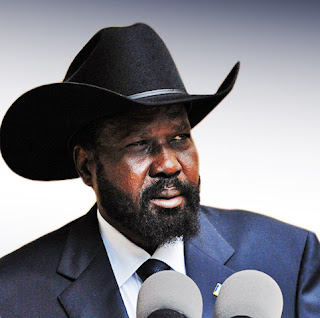
Unless South Sudanese are provided with an alternative system, it would be ridiculous to expect them to change their ways. It has become normal that anyone criticizing the leadership of President Kiir, even for good reason, must be arrested. For some political leaders, it is disrespectful to criticize the president. This is the systemic bug. 

Even leaders become helpless in such a system. Unless we have a leader who is creative and brave enough to risk it all and force change, the same culture will continue. Today, we don't have such a leader in all branches of government in South Sudan. 

Unless this system changes within the next two to three years, what we have now may become the modus operandi of South Sudan's political and legal institutions in perpetuity. A future instigation for change would become, as it is today, dangerous.

The problem is therefore not the people but the system to which they are used. Because political and legal institutions are still in their infancy in South Sudan, it is possible to effect positive change. There is still hope. But we need a leader who is going to initiate change and see it through. 

Changing the current system in South Sudan means running institutions according to the constitution and the institutional protocols that govern them 

Once people are used to bad systemic practices, change becomes difficult, and at times, fatal. 

_______________________________________

*Kuir ë Garang. Follow me on Twitter @kuirthiy 

Saturday, May 28, 2022

The autodidactic: Reading for social resistance and empathy


Photo: Dyslexia Help: University of Michigan


The mass anti-racist protests that followed the murder of George Floyd by Derek Chauvin of Minneapolis Police Department on May 25, 2020 provided a glimmer of hope for victims of racism. For the silent men and women of African descent who experience constant societal stigmatization and police brutality, the protests showed that societal attitude can change.

While the protests were emblematic of what is possible in the fight against systemic marginalization and its mitigation, these protests have a way of ending up becoming events rather than sustained anti-racism processes.

To change social attitudes and bring about sociocultural and systemic changes, therefore, sustained and accessible educational and cultural strategies become necessary. Fighting Anti-Black Racism or Afrophobia need a multi-sectorial, multi-layered approach.

There are now calls and petitions to teach “Black history” in all Canadian schools following George Floyd’s murder.

This essay suggests that reading fiction and history should be encouraged among elementary and high school students. This suggestion may sound odd. In the age of social media and Netflix, however, reading books has become less attractive.

I once asked a young teenage mother during an intake if she had an email. I wanted to send her some resources. She told me she had Facebook but not an email. When I asked how she could have a Facebook account if she did not have an email. She told me she did not know.

When I asked another young man about reading, he told me he liked to read. When I asked what he reads, he couldn’t really tell me. He then smiled and said, ‘some articles…online.” He couldn’t even tell me the website and the topics he likes.

Reading books is not everything. But it opens a world one does not see every day. It makes you travel without travelling.

While students are encouraged to read in school, most students take up reading because it is required. For young people brought up to face the reality of racism, this is a travesty.

However, reading for self-empowerment or to develop empathy among children and the youth needs the involvement of parents and community mentors. This, I hope, would make reading part of children and youth social and cultural growth. Emotional strength in the face of racism is a necessity.

Reading may encourage students from dominant social groups to develop a sense of empathy with “racialized” students.

“Racialized” students may not only develop empathy, but they may also be empowered to resist misinformation about their history. Students of African descent are confronted by two things in the school curriculum: Lack of history about them, or a distorted version of their history. This is a consequent of institutionalized racism.

But we cannot leave corrective measures to people who are not affected by a distorted history. It is like making racism fix racism.

There is now, however, a cautious optimism in Canada’s campaign against racism.

People in positions of authority are thinking of curriculum changes to include ‘Black history’ for all students. This a hopeful beginning. But this is not enough. It is more mechanical than sentimental. We need both. People are more motivated if they have a sentimental connection with the moral issue in question. Why would people care about racism if it doesn’t affect them?

Making reading a cultural pastime for young people therefore becomes important. It may take a young Toronto teenager to Nigeria of Achebe’s Arow of God, the South Africa of Peter Abrahams’ Mine Boy, the Barbados of George Lamming’s In the Castle of My Skin, the Ohio of Toni Morrison’s Beloved, or the West Africa of Leo Frobenius’ The Voice of Africa….etc.

Consequently, reading fiction, African and African diaspora history become important. This can be buttressed through literacy programs at young age.  In a multicultural country like Canada, this is vital in the fight against racism.

It is important to note that Canadian immigration was openly racist as late as 1962. Racism, according to David Matas, was the immigration policy.

Below are important examples of reading programs.

In Toronto, The Reading Partnership  works with parents and children to help develop a reading culture at an earlier age.

As Camesha Cox, the founder of The Reading Partnership has argued, encouraging literacy and reading at an early age can create “a culture of reading and learning.”

Using the work of late American novelist David Foster Wallace, the California-based Reading Partners writes that reading helps ‘build developmental skills of emotional intelligence and empathy, enabling our young readers to better connect with other perspectives and human experiences.’

Maria Nikoleja, a professor of children literature at Cambridge University argues that ‘the main attraction of fiction is the possibility of understanding other people in a way impossible in real life.’

For young people whose histories and cultures do not feature in Canadian educational curricula, this aspect of reading becomes important.

What exacerbates marginalizing experiences when young people find themselves stereotyped are lack of constructive strategies they can use to push back while informing others and remaining safe.

When they encounter racism, they either fight or become sad.

 ‘My brother is always getting into fights over’ the N-Word, said Zora, who was interviewed by Jennifer Kelly in her book, Under the Gaze.

This violence is instigated by a sense of helplessness. But when these young people fight, they are easily stigmatized and criminalized.  

Even a child as young as a six-year-old has been handcuffed by the police without parental consent.

This would not happen if this child was not of African descent.

In a multicultural Canada where meaningful inter-ethnic and inter-racial cross-cultural exchange is extremely limited (or non-existent), equipping young people with historical knowledge about themselves and others can help in combating stereotypes.

Not only does reading enable young people to develop positive feelings towards others, but it also offers them constructive ways to express their emotions.

In the age of negative social media influence, encouraging students to read fiction is something teachers, parents and youth workers need to encourage in all students because research supports its usefulness.

Reading may also help “racialized” youth to self-educate. This may help them resist stereotyping through corrective engagements.

One of Jennifer Kelly’s participants said he knew a historical fact his social studies teacher didn’t know. “I told him,” Desmond said to Kelly, ‘that the first lady in the newspaper industry was a Black lady [Mary Ann Shadd], and he didn’t know.”

Desmond added that these “Black stuff”, which are supposed to be taught in social studies, are missing.

More than 20 years later, what Desmond said is sadly still the case. "I would love to see more about Black history and about racism in our society today and how we can face it in the future,’ said Bayush Golla to CBC on June 17, 2020.

Desmond felt empowered, but he was not alone. “Last year I was able to teach people stuff about Steve Biko,’ said Grace. ‘You feel so much better,’ added Kathleen, ‘You walk away thinking, “yeah we did we did that.” You want to brag. I would go to school and say, “did you know?”’

Like Desmond, Grace and Kathleen, Dagmawit Worku, a year 12 student in Cameron Heights Collegiate in Kitchener, Ontario, is still self-teaching “Black History.”  

This is an educational, community-based empowerment racialized youths, especially Africans and students of African descent, do not have access to in school curricula.

If there is anything history has taught us, then it is this: It is morally dangerous to assume that people will do something because it is morally important. A sentimental connection is most of the time a moral motivator.

Therefore, parents and students resort to ways of getting this empowering knowledge. Lorraine, another student Kelly interviewed said that her father ordered books from the United States “books you don’t see around here.” Kathleen puts it well when she said that “If it was your own culture…you would work hard so much harder.”

Canada may be multicultural de jure, but it is monocultural de facto.

Encouraging children to improve their literacy at an early age and then urging them to take reading as a cultural activity may help raise informed and compassionate youths. Excluding “Black history” today is not a question of malice or racism per se; it is a question of sentimental connection. As Kathleen has put it, “If it was your own culture…you would work hard so much harder.”


________________

* Kuir ë Garang is the editor of The Philosophical Refugee


To cite:

Garang, K. ë. (2022). The autodidactic: Reading for social resistance and empathy. The Philosophical Refugee. https://www.kuirthiy.com/2022/05/the-autodidactic-reading-for-social.html


Wednesday, May 4, 2022

*Is President Kiir a teetotaler or a complete...?


"Should Biar develop some tact and finesse in his activism?  Yes! Finesse and nuanced articulations are public relations necessities Biar must learn because focusing on Kiir’s personal failings creates distractions that move us away from important issues Biar discusses internationally and regionally."


Yes, I know, some of the things
Dr. Biar Ajak said during his appearance on Nairobi-based KTN News are not part of the activism many of us would recommend. Discussing President Kiir's public inebriation sounded like a conversation between two friends on the weekend over nyama choma and some beers at the comfort of their home.

 The Kenyan journalist sounded like a gossip not a journalist (Well, I don't know what being a "journalist" means these days! But that's beside the point!).

 Biar may have let the excitement of the moment carry him away. We must note, however, that Biar is always on point when it comes to the failures of the government in Juba even if we may not agree with how he articulates his positions.

 He is an activist not an opposition politician so his occasional overzealousness should be excused. We may perhaps suggest using filters when it comes to media appearances because "journalists" these days prioritize a good narrative over facts.

 It is difficult to know these days what is an opinion and what is a journalistic “this is what happened!” Even Journalists in world-class television programs and newspapers editorialize what should be a mere description of the old time, “what happened!”

 But there is a bright side to Biar's schadenfreude.

 This may sound silly, but this is a wake-up call for those around the president. Why does a man who is not even seventy walk like a hundred-year-old? Why does the president occasionally appear inebriated without his aides or advisors realizing that such unsavory appearances do not do justice to president's moral and political standing in South Sudan and in the region?

 I'm looking at the bright side of what Biar said for its practical importance. If you don't want Biar to say what he said then don't make the president appear the way he appeared in public.

 Are there people around the president who enjoy seeing the president inebriated and sickly? If the answer is "no" then why does this happened time and again?

 Those who care about Kiir Mayardit should now, I suggest, ensure that the president is protected from unsavory public displays.

 I've always said that President Kiir is being let down by those around him. The president is allowed to step out while looking either sickly or inebriated.

Biar and the KTN journalist may have been somewhat informal and tactless, but they discussed a FACT we can no longer ignore. Let's ensure that the president does not appear drunk in public instead of berating those pointing out that apparent fact. Biar wasn’t telling us what is merely inside Biar’s mind; it’s something we can all see.

If the president's advisors cannot protect him, then I think it's time for Kiir's children to protect their FATHER. Kiir's advisors make him sound and look like a fool. How is that support? How is that care? How is that respect? How is that patriotism?

In South[ern] Sudan first government website, President Kiir was described in his profile as a teetotaler. I thought it was strange that they needed to mention that on a government website. That they thought it was necessary to mention that on the government website raised a red flag for me because most of us know that President Kiir is not a teetotaller.

While I, like many of you, don't agree with Biar's schadenfreude at the expense of President Kiir, I think we need to redirect our attention and anger at Kiir's advisors because Biar is only an observer who is stating a fact with which we are all familiar.

Should Biar develop some tact and finesse in his activism?  Yes! Finesse and nuanced articulations are public relations necessities Biar must learn because focusing on Kiir’s personal failings creates distractions that move us away from important issues Biar discusses internationally and regionally.

 We must talk about possible solutions for inter-ethnic killings, deadly floods, hunger, economic stagnation, political incompetence, corruption, political intimidation, gender-based violence, child-marriage, bad schools, bad roads, bad hospitals, bad leadership…You get the point.

 As South Sudanese, we need to prioritize solutions rather than dwelling on problems with which most of us are familiar. Dwelling on problems without solutions is the reason why SPLM leaders failed South Sudanese.


______________

* Kuir ë Garang is the editor of The Philosophical Refugee.


Monday, April 11, 2022

R-ARCISS is an obstacle to peace and stability not a solution


"R-ARCISS has become a problem that needs a solution. South Sudanese have wasted a lot of time finding solutions to solutions instead of finding solutions to national problems."


Since South Sudanese warring parties signed the agreement for the resolution of conflict in South Sudan (ARCISS) in the August of 2015 and then “revitalized” it in 2018 (R-ARCISS), nothing has worked in the way agreements are supposed to work. Instead of acting as the blueprint for peace and stability in the country, the agreement has turned out to be the problem itself.

How can a problem be a solution to another problem?

However, the main signatories to the agreement, the Sudan People’s Liberation Movement in Government (SPLM-IG) and the Sudan people’s Liberation Movement in Opposition (SPLM-IO), still believe the implementation of R-ARCISS is the magical solution to the South Sudanese political crisis. They know their attitudes toward themselves and the political impasse they have experienced since the agreement was first signed in 2015. But they wish these attitudes away.

Unfortunately, the parties still believe that this attitude will magically disappear, and the agreement will be implemented in “letter and spirit” as Dr. Riek Machar likes to say.

When Riek Machar decided to withdraw the participation of SPLM-IO from the security mechanisms meeting on March 24, 2022, President Kiir deployed security forces around Riek Machar’s place of residence. When Riek protested the deployment of the forces because he was not consulted about the supposed protection, President Kiir justified his action as his attempt to protect Riek Machar.

This begs the question: Protecting from who? Are there rogue forces under President Kiir he cannot control? This dynamic raises more troubling questions than answers.

But this, undoubtedly, shows the extent to which President Kiir and Dr. Riek Machar do not trust one another. Kiir expects Riek to flee Juba at the slightest provocation and Riek knows Kiir’s recalcitrance.

Obviously, President Kiir was conscious of what happened in December of 2013 when some senior SPLM members refused to attend the second day of the National Liberation Council on December 15, the night on which the crisis began. Riek fled Juba that night.

Riek also fled Juba in July of 2016 when the implementation of the August 2015 agreement reached a deadlock, eventually leading to a bloody armed confrontation.

What one may conclude from the nature of the relationship between Vice President Riek Machar and President Salva Kiir is their inability to find a solution without external support.

It is now clear that R-ARCISS is no longer the path to peace and stability in South Sudan. It’s an obstacle.

Accordingly, Kiir and Riek need to think beyond R-ARCISS and find a home-grown solution to the problem.

The implementation of agreements is difficult, so I have no illusion for any simplistic solutions. Nonetheless, thinking in a formulaic way in a country with a complex history, politics and ethnic relations is a dangerous state of mind. But the complexity in implementing R-ARCISS is not an inherent complexity; it is its elite-centredness and the egoistic nature of agreement leaders that has created this costly impasse.

What South Sudan and South Sudanese need is a path to peace and stability. There is no divine pronouncement that the only path to peace and stability is R-ARCISS.

Being a leader requires being creative for the sake of the country and her peoples. What is happening in South Sudan now between SPLM-IO and SPLM-IG is this obsession with the elite-centered R-ARCISS as the only way to peace and stability.

This vacuous idea that all clauses of the agreement must be implemented before peace partners embark on national development is the reason why South Sudanese will continue to suffer as R-ARCISS stands in the way of peace and stability.

It's scary that President Kiir and Vice President Riek Machar are not able to think beyond R-ARCISS. How long will regional leaders and international partners be consulted to help solve issues of leadership and governance in South Sudan?

It’s time for President Kiir and Vice President Riek Machar to realize that they can forget their egos in the interest of South Sudanese. As long as external mediators are needed to reconcile South Sudanese and move the agreement implementation forward, South Sudan will continue to remain unstable.

It's nearly seven years since the agreement was first signed. That’s three years short of a decade. Politically, that should tell South Sudanese everything they need to know about Kiir’s and Riek’s intention regarding civilians and the country. A formal agreement will never bring peace and stability to South Sudan.

It’s time to prioritize what civilians want. It’s time for Dr. Riek and President Kiir to realize that two decades have been wasted through a petty yet a costly rivalry.

There is hunger and flood everywhere in South Sudan. There are ethnic conflicts in Eastern Equatoria, in Western Equatoria, in Lakes State, in Warrap State, in Jonglei State, in Unity State….

It’s time to rethink South Sudanese political future and the path to peace and stability. South Sudanese civilian have been in a state of destitution for over fifty years and Kiir and Riek have added another fifty years of suffering and destitution.

It’s time to move past R-ARCISS and think as South Sudanese who must solve their internal problems as brothers and sisters. If Riek and Kiir cannot work together, or they are unable to find solutions beyond R-ARCISS, then it’s time for them to acknowledge that they are liberation and historical leaders, and that time is now ripe for development leaders.

R-ARCISS has become a problem that needs a solution. South Sudanese have wasted a lot of time finding solutions to solutions instead of finding solutions to national problems.


*Kuir ë Garang is the editor of The Philosophical Refugee.'

Thursday, March 17, 2022

Western philanthropists and Russian oligarchs or are they all OLIGARCHS?

By Kuir ë Garang*


Oligarchya government in which a small group exercises control especially for corrupt and selfish purposes;  a group exercising such control. ~ Merriam-Webster


Photo: GeekWire

African American historian, Nell Painter, argues in her book, The History of White People , that what we believe depends on what our cultures and society has educated us to look for in anything we do. This is a social reality we tend to overlook; or we attend to it only when it becomes relevant. 

The problem with contemporary social justice discourse in the west, especially in North America, is that advocates expect the target of their campaigns to know everything about anything; and they also expect them to believe things in their culture in the same way they believe social issues in other cultures. This is not only impractical, it is also a natural impossibility. 

Discourse, as a social use of language, affects or changes how we perceives things. But that depends very much on the culture and the epistemological forces behind the use of language in this context. Take for example, how Americans and the western media describe wealthy and influential Russian billionaires and how they describe American billionaires. Russians billions are 'oligarchs' and western billionaires are, well, just billionaires.  But morally, according to the western intelligentsia, western billionaires are philanthropists not oligarchs. 

While western billionaires affect politics, cultures and social values globally, they are still not considered oligarchs. How many of us would refer to Bill Gates or Elon Musk as oligarchs? Maybe only a few. But this is not because they are not oligarchs but because our linguistic resources come from a defined western discourse that shape our thinking. 

Here is another example about African history. In 1960, the father of African Studies in the United States, Melville Herskovits, describe Africa as a 'geographical fiction.' While this statement is true, I have always wondered why this statement is restricted to Africa when every country in the world, and I mean every country, is a geographical fiction. All borders in the world were arbitrarily created. 

(I address this issue in "Birth of a State).

But many African historians and analysts have taken this Herskovitsian view that Africa is a geographical fiction without being critical of it. The reason? The discourses and epistemologies that influence our thinking about Africa and about ourselves are informed about what western scholars have written about Africa. 

Our understanding of Africa and African issues is proscribed; it is determined by the linguistic resources, the historical and modern discourses coming the west or the legacies of slavery and colonialism. This is why postcolonial scholars attempt to rethink African history as UNESCO has attempted to do with the General History of Africa. It is also the very reason why The Empire Writes Back

However the average man and woman in Africa has little luxury to rethink history so they rely on a group of people that French existential philosopher, Merleau-Ponty has described as 'the community of thinkers.' They believe a world that has already been structured for them. 

This is the case with the oligarch epithet. 

Even when it is factually accurate to describe Bill Gates as an oligarch, one would find oneself at the receiving end of the western media disparagement because the western culture has trained us to think of Bill Gates as a 'philanthropists'.  He cannot possibly be an oligarchs. 

We ignore these seemingly simple issues; but this is how the human mind is shaped internationally. 

So, anytime you commit to a certain social issue, especially a social justice issue, always remember that people don't believe something because it is simply the right thing to do. They believe it because they have been convinced about its usefulness to them; or that social, political and legal conditions are such that they cannot do otherwise without being penalized. 

We only doubt things because we have reason to doubt not because others expect us to doubt because they doubt it themselves. 

So, is there any special fact why western billionaires are 'philanthropists' and Russian billionaires are 'oligarchs'? There is none; it's all about the discourses we have been raised or taught to believe.


*Kuir ë Garang is the editor of The Philosophical Refugee.'


Monday, February 14, 2022

Inter-ethnic feuds and the failure by Juba to create a mitigating framework


South Sudan is, and has always been, a plurinational state (See Birth of a State). This is something South Sudanese leaders know to be a historical and an existential fact they cannot brush aside. 

However, seventeen years after the comprehensive peace agreement (CPA) was signed, South Sudan still does not have a structured and institutionalized process to deal with inter-ethnic violence. As we known, the Anglo-Egyptian and the Arabo-Islamic elites preyed on ethnic differences in South Sudan to ensure the ease with which they could control the civil population. They understood that a unified civil population is a threat to the effectiveness of power. Lord Lugard's 'indirect rule' was meant to give colonial administrators control over 'natives' through colonialism-friendly 'chiefs'.

So why do South Sudanese elites in Juba turn a blind eye on deadly ethnic violence in South Sudan? 

There are two things we may conclude. Either the elites have adopted the colonial attitude by ensuring that South Sudanese fight among one another to leave the ruling elites unchallenged; or South Sudanese leaders do not know how to devise mitigating strategies or structures. Either way, the civil population will continue to turn against one another to address historical grievances or because of frustrations from existing practical issues of marginality in politics and in the economy.

Essentially, inter-ethnic violence therefore leaves the ruling elites, which South Sudanese scholar, Majak D'Agoot, has described as the 'gun class', to entrench themselves in power without any civil population to hold them accountable. 

In his 1985 speech, former apartheid president of South Africa, P. W. Botha, argued that Africans are not a majority in South Africa because, he claimed, they are a collection of tribal ethnic minorities. This therefore, in his estimation, makes the minority Afrikaneers another minority among other minorities. Unsurprisingly, this was a colonial strategy meant to compromise African anti-apartheid solidarity.

In South Sudan, pitting ethnic groups against one another has created a compartmentalized country in which some people live in luxury while others live in destitution and poverty as they feud among themselves away from the seat of power in Juba.


But what makes this situation more worrying is that the ruling elites give the impression that they care about South Sudanese citizens. One would have assumed that these leaders do not care about the civil population in the way they have failed the country for nearly two decades. In seventeen years, South Sudan would have devised a concrete violence mitigating strategy if it wanted to. 

The former head of the United Nations Mission in South Sudan (UNMISS), Hilde Johnson, explains in her book South Sudan: The Untold Story how the UN forces were overwhelmed by armed young men threatening to annihilate other ethnic groups in retaliatory rage in 2012. But what Juba tried then was a one-time appeal for calm without a sustained strategy. 

When more than thirty civilians were butchered recently in Jonglei State, a group of politicians from Jonglei met President Kiir to appeal for support. But what is needed now is more than verbal appeals. What is needed is a concrete strategy that would mitigate the problem without exacerbating animosities or leaving others embittered. 

Ethnic belonging is a divisive issue in South Sudan but it doesn't have to be. While the late Mozambique's President Samora Machel once argued that "for the nation to live, tribe must die", it is important to note that tribes in themselves are not the problem. Even if tribes were eliminated by some social miracle, other internal division factors would arise because there are various 'identity anchors' people use to categorize and divide themselves. 

Unity in diversity, as some have argued, is the best way to go. But unity in diversity in not a walk in the park as North Americans would say. It requires a committed and sustained strategy. 

One of the best ways is to ensure that federal leaders regularly visit South Sudan's 'hot spots' to sensitize South Sudanese about  why it is helpful for them to leave in peace. This may be done through what I have suggested in other place: the Ministry of Tribal Affairs  (TAM) or a Ministry of Ethnic Affairs' (MEA).  This ministry would centralize and structure violence prevention methods. There would be funding in the ministry and a workforce dedicated to reducing ethnic violence in collaboration with state authorities and local chiefs. 

In this case, aggrieved ethnic groups would know where to go and who to talk to at the local, state and federal levels regarding ethnic violence. Now, all appeals are directed at the president who has no formal and institutionalized mitigation strategy. 

It is important to note that ethnic groups that consider violence to be part of their cultural existence should not be expected to magically part ways with ways that have worked for their internal sociocultural pride for centuries. A sustained strategy that makes them part of the mitigating strategy is necessary.

Additionally, the devolution of the security sector may also help. This may involve where they are trained. Instead of having all security forces trained in Juba or around Juba, the headquarters of various security forces may be devolved into areas where ethnic violence is frequent. 

Bilpam, which is the headquarters of the army now in Juba may be moved and established between the towns of Bor and Pibor. The police academies may either be moved to Lakes State, or the policing given to the states and federal police created. 

This would ensure that areas that are less frequented yet susceptible to violence would be settled to encourage alternative ways of making a living. 

What I am suggesting here is a mere framework that may make South Sudanese leaders think about mitigating strategies. Preventing ethnic violence cannot be left to chance or regular appeals to the president when one's relatives are killed. 

________________________________________________

Kuir ë Garang is the editor of THE PHILOSOPHICAL REFUGEE. He is also a Doctoral candidate at York University School of Social Work and a Part-Time professor at Sheridan College. Contact: kuirthiy@yahoo.com

Saturday, February 12, 2022

What happened to Canadian federal leadership?


What has happened to leadership in Canada scars and scares me. It has also turned into a trauma of my childhood refugee life and civil wars. I left my family in Sudan as a teenager in search of educational opportunities in a refugee camp in Northern Kenya in 1995.

Kenya, under President Daniel Arap Moi, was relatively peaceful and stable than the Sudan of President Omer El-Beshir. But coming to Canada in 2002 exposed me to a different level of peaceful and stable. Except for the few occasions when fireworks made me look out of the window of my resident at McGill University to ensure that the city is not being evacuated, I felt I was home. Nineteen years later, I’m still to get used to fireworks. But I’m home.

For those of us who know what it means not to be free, Canada means a lot more than what it means to those who were born here. You take it for granted that you are free. You can compare it with what you see on TV; but you have never lived not being free.

Canada offered me both safety and opportunity. It also offered me an opportunity through which I could safely write about issues of leadership and human rights in Sudan and South Sudan. I have always felt safe and lucky. Not anymore. Canada has become a country of either/or.

I feel intellectually cheated, emotionally trapped, and psychologically broken when I see what our Canadian leaders have become. I’m warned by friends and family members not to go to South Sudan for fear of getting arrested or even killed. But I was lucky because I had a home in Canada. But it is traumatizing to see Trudeau sounding like the very leaders I have been criticizing for nearly twenty years now.

When I heard a woman supporting the “freedom convoy” as it passed through Ontario say that immigrants come to Canada because of our freedom, I broke down. I felt like I was back in the refugee camp. That woman and the convoy gave me a voice.

Anytime I see Prime Minister Trudeau on TV I see a reflection of African leaders who think that enforcing laws is leadership. Like European Medieval princes, African leaders have been striving to build countries of single opinions where disagreement is considered enmity.

How did that come to Canada? 


But it was only about four years ago that Canada was hailed as the hope of the western world when Donald Trump, who considered simple human decency to be “political correctness”, became president. Trudeau then offered hope, inclusion, and the twenty-first century leadership.

Unfortunately, Canada has become a country where national leaders look into the camera and divide citizens into “Canadians” and the “unvaccinated.” It has become a country in which a prime minister interferes with parental responsibility by looking into the camera and tells children to talk to their parents about vaccines. Vaccines are undoubtedly useful, but a sound leadership would have addressed the problem differently.

The protesters came to the national capital to talk to their leaders; but their leaders refused to even talk to them. Where else in Canada should they have gone? Despite some few misguided individuals among them and the inconveniences they caused to Canadians, these protesters were coming to talk to elected leaders in a democracy.

And yes, yes, some will say that things are different; we are in a pandemic. But the pandemic has killed thousands of Canadians that only a few, if any, need to be reminded about the danger of COVID-19. All Canadians have been affected. But making Canada a country of a single opinion portends a dangerous trend for a post-pandemic Canada. 

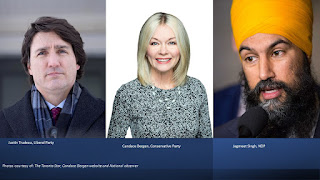
If the Trudeaus and the Singhs are the calibre of leaders of tomorrow, then Canada needs a new breed of leaders. Siblings are not talking; friendship have unravelled, political divisions have become “medieval tribalism”, and dialogues are dismissed like the proverbial “sleeping with the enemy.”

What happened to my beautiful Canada? Let’s not blame COVID-19 for this is not the first nor will it be the last pandemic as experts tell us. We have the vaccine, but we lack a sound leadership to maximize its usefulness. Vaccines have been politicized. The pandemic would have not got out of hand and Canadian would not be divided in the way they are now if we had leadership. We have a dry power and implementation of rules.

What I have learned for the past twenty hears of writing about leadership and issues of governance in Sudan and South Sudan is the difference between exercising leadership and enforcing rules and regulations. It is easy to enforce rule and difficult to exercise leadership. Quebec Premier, François Legault, has learned this truth.

Enforcing rules and regulations is NOT leadership. Any idiot in a position of power can do that. Ending crises without heavy-handedness is what leadership is. The police in Ontario and Alberta have shown more leadership than our political leaders. They managed to convince some protesters to move trucks. Why can't our leaders do the same instead of doubling down about "we will not be intimidated." This is not about competition. Prime minister Trudeau refused to talk to people who came to talk to him; now Canadians are paying the economic price. They came to talk to their government and their government refused. They came to the capital. Perhaps they should have gone to the NORTH POLE AND talk to the bears!

Like leaders in Sudan and South Sudan, Canadian leaders have confused leadership and power. Leadership is about building consensus in difficult of situations. It is not about counting political victories or about enforcing laws. Any average dictator can exercise power by enforcing laws; but it takes a leader to build consensus about the lives of citizens beyond political longevity.

After 1962 when Canada removed racist immigration policies, Canada has been in the forefront of global leadership.

Unfortunately, Prime Minister Justin Trudeau and NDP leader Jagmeet Singh have failed to understand that leadership is about convincing the few who don’t agree with their ideals rather than expecting the few to magically bent to the will of the majority. That the protesters are all “white supremacists” with “unacceptable views is an insult to pandemic-weary Canadians.

As an individual who has historically suffered (and indeed continue to suffer) the consequences of “white supremacy”, I find it sickening that “white supremacy” is lightly thrown around by someone who wore a black face as an adult and a teacher.  

Asked about what he would do about the truckers on Ottawa during CTV’s Question Period with Evans Solomon, Singh equivocated. Instead of outlining his solution to the problem that is now inconveniencing the lives of average citizens in Ottawa, Singh blamed the freedom convoy and the prime minister. For Mr. Trudeau, it is all about winning against the freedom convoy.

Was the prime minster relying on the protesters becoming violent and turning the public sentiment against the freedom convoy? Tough luck!

Relying on the sentiment of the majority to silence dissenters is to ride the wave of populism. That is not leadership; that is medieval papal opportunism.  It is time for Trudeau to become a leader and stop his political tantrums. It is time for Singh to help find a solution rather than wielding conspiracies about the freedom convoy overthrowing the government. It is time for the conservatives and Candice Bergen to find solution rather than waiting for Trudeau to fail.


Kuir ë Garang is the editor of THE PHILOSOPHICAL REFUGEE. He is also a Doctoral candidate at York University School of Social Work and a Part-Time professor at Sheridan College. Contact: kuirthiy@yahoo.com

Ms. Adut's appointment and Dr. Riek's trial

In South Sudan the problem is the system, not capacity or the character of the people.

Photo: ICRC Audio Visual Archives The youth in South Sudan have no people-centered mentorship. As things stand now, they have been introduce...